Showing posts with label Archetypes. Show all posts

Friday, October 23, 2015

Archetypes | The Many Heroes


It's been awhile since I wrote about Archetypes...a long while. 
With NaNo coming up, I know a lot of people are in the middle of planning their novels—unless you're a brave Pantser in which I applaud you *claps*—and so I thought I would bring back the archetypes in order to help some of you along. Even if you know your story inside and out already, I encourage you to see if you can spot your character among the archetypes below. *points down*

Keep in mind that archetypes aren't cliches, they're patterns that naturally occur in stories. When I write, I often include archetypes without even knowing it and that's not a bad thing! To get a little more background on what an archetype is, follow this link.

That being said, make sure that as a writer you're still being creative. Look for your character to fit into an archetype rather than looking for an archetype that can become a character.


The Warrior


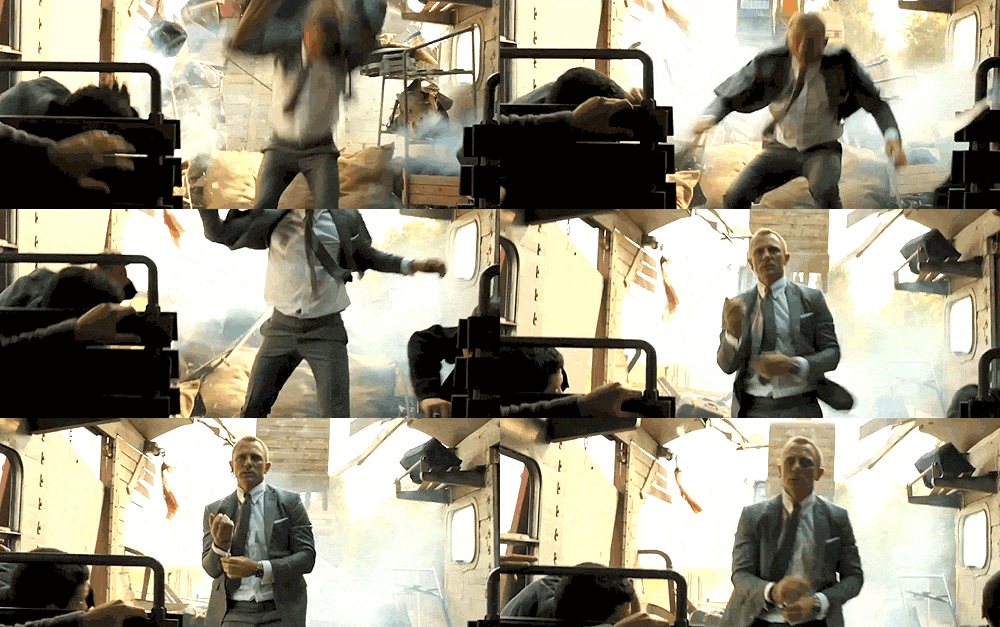
The warrior is often characterized as someone who faces physical obstacles and faces external forces. The forces don't have to be human—they can be monsters or even extreme conditions like snow storms or crossing a sheer ledge in the pouring rain. The warrior isn't the underdog—he/she is already trained or is born with the abilities that will theoretically help him/her to achieve their goal—they're the 'chosen one'. That doesn't mean it's easy going for them though. Think James Bond or "The Last Samurai".

The Lover


Pretty self explanatory. The lover is motivated by love. Prince charming is probably the most obvious of heroes we could choose for this one but personally I think that any character who's motivated by love for their family can also be classified as a lover. Maybe other archetypes will fit them better but who said you can have more than one ;) 

The Scapegoat


Seems like an odd type of hero right? This hero will stir up a lot of feels with your readers though. Why? They endure suffering all for the sake of other people. Usually it's for a large group of people—think of a rebel who's trying to stop the oppressive king from hurting his villagers. He endures public torture, humiliation and death threats all while trying to save the people. See? FEELS! 


The Transcendent Hero


Also know as the tragic hero. The only reason why we get to call this hero 'the transcendent' is because they have a groundbreaking, heavenly light shining, light bulb momenting, discovery or piece of wisdom at the end of the novel...and their lives. Usually they die. Yep. More feels. *sobs* 


This hero has a fatal flaw that results in their downfall throughout the novel. Think of Hamlet. Or Macbeth. Or Romeo.
Alright, let's just go with all Shakespearean tragedy heroes. 

The Romantic/The Gothic


Different from the lover but sometimes this character is also propelled by their love. This hero has a undeniable dark side to their moon. 
I'm gonna use our dear Dr. Frankenstein from Mary Shelley's novel, "Frankenstein", as an example. He's definitely the protagonist in the novel—well some would argue that—but as the novel goes in, it gets harder and harder to defend him and his so called 'humanity'. 
Also, DEATH NOTE!!! *clears throat* That is all. 


The Apocalyptic Hero


This hero faces the destruction of society as their main apposing force. This isn't a post-apocalyptic hero so Katniss doesn't count. This hero is in the midst of the destruction. Cassie from "The 5th Wave" would be closer to matching this description.

Anti-Hero


This hero is a failure for a living. Was that a little harsh? 

However this hero isn't the anti-hero you're thinking of. They're coming up. 
Instead, this hero is usually humorous and while he/she has a goal, no one actually expects him/her to succeed. Think of Forrest Gump. He's an underdog, you can't help but laugh at certain things he says or does but in the end, you only want him to find the reach the top. 


Defiant Anti-Hero


Anyone seen Code Geass? Defiant Anti-Heros like Lelouche go against society's model for what it means to be a hero. Depending on what your story world is like, this hero could be almost anyone. Robin Hood comes to mind and then so does Tally from "Uglies".

The Unbalanced Hero


There's always that one hero who's a little bit crazy. They're unstable emotionally or psychologically and despite their quest, they usually can't break from it. Hamlet fits into this one pretty darn well. Also, Roderick from "The Fall of the House of Usher" is definitely unbalanced. 

The Denied


The protagonist here has some sort of status or 'otherness' that makes their heroism possible. Maybe they work for the government of a corrupt society so they have inside information? Or maybe they're the opposite. Maybe they're an outcast and so no one expects them to be the hero they turn out to be. This hero could also have some sort of ability. Think of the show, "Heroes". If it weren't for the abilities of the characters in the show, they wouldn't have been able to save New York.

The Superheroic


Cue the "Superman" theme song! 


This one is rather easy to understand. Your hero here doesn't belong to society. They're set apart because of their ability. However, society needs them. If it weren't for this hero, New York would be destroyed—again—and everyone would die in a blazing inferno of Smaug fire...not necessarily in that order. 
Seriously though...could you imagine Smaug in New York? 


There you have it! What hero is your protagonist? And as a fun bonus question, if your villain was the protagonist, what type of hero would they be? 

Write on, Wordlings! 

Wednesday, July 23, 2014

Archetypes: All the World's a Stage Part 3

Read previous entries on archetypes:
Archetypes: A Hero's Journey Part 1
Archetypes: A Hero's Journey Part 2
Archetypes: All the World's a Stage Part 1

Hey guys! It's been less than a week since I last posted but I wanted to get this post up close after the last one since they're supposed to be one thing always. 

If you missed last week's post there's a link above that will escort you there ;) 
As a reminder, I'm currently covering symbolic setting archetypes which are settings in stories that mean more than what how described. They can prove a point or add some weight behind what the author is trying to say. 
Now, let's move straight into the facts!

FUN FACT: Hundreds of archetypes are in the Lord of the Rings Trilogy. Go ahead and count them if you don't believe me XD


7) The Maze or Labyrinth


This can represent a puzzling dilemma or a great uncertainty. It's sometimes a symbol for the monster within one's self. 

In the maze or the labyrinth, our hero may ask questions regarding himself or his journey. Perhaps he feels lost or afraid. Not necessarily lost in the maze and afraid he'll never get out (though that may also be the case!) but lost in himself and afraid he'll never reach the goal. 
What better example for this than the Maze Runner? The entire book is centred around escaping this unsolvable maze! I'm posting the trailer for the movie because I'm way to excited for this thing XD 
ex. The Maze Runner by James Dashner, The Battle of the Labyrinth by Rick Riordan

8) The Castle
Oh the castle... I can think of a million–bagillion examples for this one! 
Castles are strong places of safety. They can hold treasure or the princess (Super Mario anyone?). Sometimes castles are bewitched or enchanted. They can represent home or another safe place. 
In The Hobbit and The Lord of the Rings trilogy by J. R. R. Tolkien, Rivendell (the place in the photo) is most definitely seen as a safe place. Bilbo describes it as "A perfect house, whether you like food or sleep or story-telling or singing, or just sitting and thinking best, or a pleasant mixture of them all."
It's a safe place, protected by Elven magic, the River Bruinen and Eldron himself. When our heroes arrive in Rivendell, I feel a sense of 'everything will be okay', I feel a bit relaxed. 
When characters leave the castle walls, bad things may happen to them like they do in The Little Mermaid. Castles are shelters.
Disney knows how to use castles well. It's true that a lot of the villains reside in castles but who said that they were safe places for the protagonist alone? Our antagonist needs a security blanket too and maybe it just so happens to be a castle.
ex. The Hobbit and The Lord of the Rings trilogy by J. R. R. Tolkien, The Little Mermaid, Brave 

9) The Tower 

This is the strong place where evil resides or where something is locked away from society and fellowship. How many people thought of Lord of The Rings when they heard 'tower' and 'fellowship'? I know I did! 
The Tower of Cirith Ungol used to be a place that protected the province of Ithilien from the evil of Mordor. However it slowly became a base for Orcs. Bad things happen at this tower and what it became was the complete opposite of fellowship. It was built after The War of the Last Alliance of Elves and Men and then slowly became corrupted. See the link? 
Towers also keep princesses locked up like in Tangled and Shrek. The person that locked them up usually isn't the nicest of people either, supplying the evil in the tower.
ex. Tangled, Shrek, The Lord of The Rings: The Two Towers

10) The Winding Staircase
This is symbolic of the long and difficult way into the unknown. 
This archetype will forever remind me of Gattaca. There's this one spiral staircase that shows up every time Vincent and Jerome are in the apartment and my teacher couldn't stop pointing it out when we studied the film in class! It really is a fantastic example though. Jerome physically can't climb stairs and Vincent is taking on a new identity. The photo below is a screenshot of this.
There might be a staircase that leads up to the a tower (*wink, wink, nudge, nudge*). Our hero must climb it but they have no idea what lies ahead of him. Maybe there's a spiral staircase in the hero's home that leads to their thinking spot. The hero may go up their when he doesn't know what to do. And a staircase doesn't just have to lead up, it can lead down too. Maybe it leads to the underworld (*gasp* another archetype!) The possibilities are endless with this one! 
ex.  Gattaca, Cinderella, Enoch's Ghost by Bryan Davis

So that concludes the setting archetypes. After three posts, I've got everything covered XD I hope they've been useful and inspiring to those of you who read them :) If you enjoyed them, be sure to check out the other archetypes posts at the top of this one. 

Are any of these archetypes in your story? I'd love to hear if they are! Let me know in the comments below :) 

Saturday, July 19, 2014

Archetypes: All the World's a Stage Part 2

Read previous entries on archetypes:
Archetypes: A Hero's Journey Part 1
Archetypes: A Hero's Journey Part 2
Archetypes: All the World's a Stage Part 1

Between the Beautiful People link up, my neglect of my school work from last semester and my attempt to make summer holidays the best is can be, I let blogging slip through my fingertips. Whoops...*coughs* Now that's it's officially summer, I don't have many excuses though ;) 
Before Beautiful People, I wrote about the situational setting archetypes in stories. This time I'm going to write about symbolic setting archetypes. The difference you ask? While situational settings are more like the premise of stories, symbolic settings are more like elements in the story that show up once or twice. I suppose you could say that the main difference is that symbolic settings don't wrap the story around them as much as they add extra punch to the plot, characters and theme. Since there's a lot of them, I decided that I'd split this post into a two shorter parts rather than making it super long. 

FUN FACT: Joseph Campbell took Carl Jung's ideas of archetypes and used them to write his book, A Hero with a Thousand Faces. This book is what aided George Lucas in creating the Star Wars Saga. 


Bilbo Baggins in
The Hobbit: An Unexpected Journey
1) The Threshold 

This is the metaphorical gateway to a new world. The hero has to go through it in order to start the journey, to change and to grow. It's a pretty broad term but I really do think that all stories have them. The Threshold could be a conversation with a certain person, an irreversible action, a decision that have to make within themselves or it really could be a door. Going trough the threshold won't ever be easy. Our hero will struggle to go through it either internally or externally. 
In The Hobbit, Bilbo Baggins signs the contract with the dwarves but not after he really thinks about it. However, in the The Fifth Wave Ben's Threshold is the gruelling military training camp. In both cases, these things set the character on a path to change and grow. If a major character change doesn't come afterwards, it's not a Threshold and without the Threshold there is no story.

2) The Underworld

This is another thing I think all stories have. It shouldn't be taken though as a literal underworld. In archetypes the underworld is the place where our hero will encounter their greatest fear and maybe even death if it's that kind of story. It can be a dragon's den like in The Hobbit: The Desolation of Smaug, or a big city like in Mockingjay. Of course, or hero is always confronting their fears and possibly death throughout the entire story but the Underworld will be the place where they almost won't make it out. Don't let the hero fail though! We all want them to beat their fears, that's what we've been routing for since the start. 


Katniss and Gale in the film
adaptation of The Hunger Games
3) The Wilderness 

Rules don't apply here and people and things run wild. A fantastic example of this is the forest outside of District 12 in The Hunger Games. There's no peacekeepers out here to tell Katniss and Gale that they can't hunt. Many times the wilderness is tied to serenity but not always. 
Something I've noticed is that children are often associated with this archetype. Where the Wild Things Are, The Adventures of Huckleberry Fin the music video for Featherstone by The Paper Kites comes to mind. 
ex. The Hunger Games by Suzanne Collins, The Adventures of Huckleberry Fin by Mark Twain, Where the Wild Things Are by Maurice Sendak, Epic

4) The River

In archetypes, when our hero comes in contact with river it represent the flow of time. This can be taken in many different ways. Maybe our hero took a trip back in time and ends up near a river, maybe like in the case of the film Chocolat the village is trapped in their traditional ways and our hero often finds herself looking out over the river. In Tom Sawyer, Tom and his friends play by the river, bringing emphasis to the boys' youthfulness. 
It's a more subtle symbol but it can be pretty effective if used properly. It's probably one of my favourite symbols ^ ^ 
ex. Chocolat, Tom Sawyer by Mark Twain 

5) The Wasteland


Erindale as a frozen wasteland in Frozen
You see this one all the time now in pop culture since dystopian novels and film adaptations have peaked. This represents loneliness, desolation, despair and no growth. The Scorch in The Scorch Trials is a great example. Sun flares destroyed the land and left it dry and festering with disease. The characters come across an near empty city, getting a taste of just how lonely this wasteland is. 
Another good example of a wasteland is in Frozen. Instead of a dry wasteland, it's a frozen one. Who would have guessed? XD After Erindale is cast into eternal winter, the people of the kingdom are in despair. Scene cuts to the kingdom really do leave you feeling lonely. Not until the resolution of the film does that feeling let up. 
ex. The Scorch Trials by James Dashner, Frozen

6) The Crossroads 

Another element that I think is in every story is the crossroads. This is where our hero enters a place of suffering (maybe even the underworld!) and is forced to make a decision that will affect the rest of their journey. This is a pivotal moment for the hero no matter what they choose. 
Since most people have seen Frozen, I'll use that as an example. 
Spoiler alert! At the end of the movie, Anna is freezing to death and knows that only an act of love can save her. She sees Kristof running towards her, he can save her. But in the other direction, her sister is about to be killed. She's dying and must choose her life or her sister's.


Are any of these symbolic archetypes in your story? What's the threshold, underworld and crossroads in your heroes journey? Let me know in the comments below, I'd love to read them! :) 

Sunday, June 08, 2014

Archetypes: All the World's a Stage Part 1

Read previous entries on archetypes:
Archetypes: A Hero's Journey Part 1
Archetypes: A Hero's Journey Part 2

In school we recently picked up Archetypes and it got me thinking about them all over again. I figured since I haven't written about them since February, it wouldn't be a bad idea to reopen the topic.
When I wrote about them last time, I discussed both the origin of archetypes and the different journeys that characters can go on. Today I'll go through the different recurring situational settings that come up in archetypal stories. Situational settings are basically the premise of stories.

FUN FACT: Carl Jung, the psychiatrist that came up with the idea of archetypes, also came up with the idea of introverts and extroverts along with other personality types.
All of us are living, breathing archetypes! I'm not sure why, but I find this really cool.

1) The Desert

The desert is commonly associated with spiritual sterility and barrenness but shouldn't be confused with the wasteland archetype. 
If you've ever seen the movie Hidalgo, you would know that this archetype fits it perfectly. The main character, Hopkins, has close relations to the Native Americans and their spiritual traditions but refuses to acknowledge this side of him until the climax. 
By the end of a story in the desert, the hero will likely come out of their spiritually stale place after leaving the desert or just before they do. 
The hero may also contrast the others in the desert and become the only one who isn't barren. Throughout the story they may be the only character that's taking their beliefs anywhere and their battle involves changing the minds of others. 
ex. Hidalgo, Quarantine by Jim Crace

2) The Orphaned Ruler 

In this story, our hero grows up ignorant to the power he/she really holds. He could be anything from a prince separated during a war and raised by a young peasant girl to the son of a mafia leader sent away for his own protection.

So how does the hero discover their power? It could happen through a number of ways but according to the archetype it happens after they're rediscovered by their parents.
Rapunzel in Tangled
The most classic and well known example of this is Tangled. Rapunzel is kidnapped by Gothel as a baby and is raised without knowing that she's a princess. After unknowingly visiting her home kingdom (and a few other happenings) she discovers that she's the lost princess. This discovery sets the stage for the events that lead to the climax.
The hero in this story always, always discovers their true identity and this discovery will bring both good and bad to the character.
ex. Tangled, Alex Rider by Anthony Horowitz, Jupiter Ascending 

3) The Damsel in Distress

This one is pretty self explanatory but incase you're not familiar with it: a beautiful young woman is rescued from a monster by a handsome young man who later marries her. Tons of fairytales follow this settings.
Shrek is the complete reverse of this archetype. The creators flip everything on it's head. The monster isn't really a monster, neither the hero or the damsel are drop dead gorgeous and while they get married, it's certainly not expected.
The monster in this story doesn't have to be a beast, it can also be a monstrous person like in Cinderella. Simplified, the monster is the villain.
ex. Cinderella, King Kong, Star Wars: Episode VI - Return of the Jedi

4) The Long Journey


Hiro (Masi Oka) and Peter
(Milo Ventimiglia) in Heroes
This one is pretty vague but probably my favourite. It could include anything from a difficult quest to a pursuit for revenge. When I first read this archetype I initially though that all stories fit this category but the more I thought about it, the more I realized I was wrong. Most romances don't fit here and neither do most contemporary novels.
The hero could be physically trekking across miles of land (The Lord of the Rings by J. R. R. Tolkien), waging war on an empire (Code Geass) or saving New York from destruction...again (Heroes). 
ex. The Lord of the Rings by J. R. R. Tolkien, Code Geass, Heroes, The Count of Monte Cristo by Alexandre Dumas


Hades and Percy in the movie
adaptation of The Lightning Thief
5) The Katabasis

Katabasis is a Greek word meaning "going down". In literature and especially greek mythology, it refers to a decent into the underworld. This one can be taken both literally or metaphorically. The hero could literally descend into the underworld or could enter an 'underworld-like' place in hellish conditions such as a dystopian land.

Our hero in this story is brave, very motivated and sacrificial—they have to be, it's the underworld! In these stories, our main characters may spend quite some time in the underworld or they may visit it briefly. An important element to note is that the hero can not die or it would not be true Katabasis. Anabasis (a Greek word meaning "going up") should always follow Katabasis.
ex. Percy Jackson: The Lightning Thief by Rick Riordan, Orpheus and Eurydice from Greek mythology, Alice In Wonderland

6) The Garden

The Garden is known in the archetype world as one of the 'Big Four'. It's a symbol for birth, fertility, abundance, growth, peace, tranquility—you get the idea. Characters can find refuge in gardens and while the entire story may not take place in one, it's something that our hero will continuously return to.

Gardens can sometimes be ruined or 'poisoned' which will force the hero to leave, sending them on their journey.
ex. The Secret Garden by Frances Hodgson Burnett, An Episode of Sparrows by Rumer Godden

A still from the film adaptation of Beastly
7) The Redemptive Rituals 

At the beginning of these stories, the protagonist screws up. The premise will then surround their redemption.
The ritual could be a set thing that they must do according to society, a contract or a spell, or something they believe they must do in their own heart to make things right.
A famous example is A Christmas Carol by Charles Dickens. Our protagonist has a bitter heart and is shown through three spirits that he needs to change.
Redemption must always be found in these stories or the premise is worthless.
ex. A Christmas Carol by Charles Dickens, Beastly by Alex Flinn

8) The End of the World

Another self-explanatory archetype: so many popular young adult novels fall under this archetype. Whether it's a dystopian/post-apocalyptic society or the impending doom of a city, danger will always be looming over the heads our our heroes. There might be a time limit like there is in Heroes but that's not always the case. Instead, the danger may be the world they live in or the people that want to destroy the world.

ex. Oblivion, I Am Number Four by Pittacus Lore, The Scorch Trials by James Dashner, Enders Game by Orson Scott Card

Which archetypes do your stories fit into? 

Sunday, February 09, 2014

Archetypes: A Hero's Journey Part 2

Read the first entry here: Archetypes: A Hero's Journey Part 1 

Last time I wrote for the writing dimension, I discussed what the term 'archetypes' really means and I went through the first five of eleven journeys the hero of a story can take.

Archetypes can be applied to almost anything in stories; images, symbols, characters, plot patterns, ideas and even themes.

FUN FACT: Did you know that it's been proven that archetypes also show up in the dreams we have? Both daydreams and dreams that have while we're asleep.
This goes to show just how cool the psychology behind archetypes is.

Today, I'm gonna finish covering the types of journeys a hero can take. If you haven't read the first five, I have a link at the top of the post you can follow.

6. The journey in search of knowledge.
This can be used in mystery novels. Think about it: the character is trying to figure out who murdered the lady down the street, who set the bank on fire and so on. They’re trying to gain insight or knowledge in order to solve the mystery.  
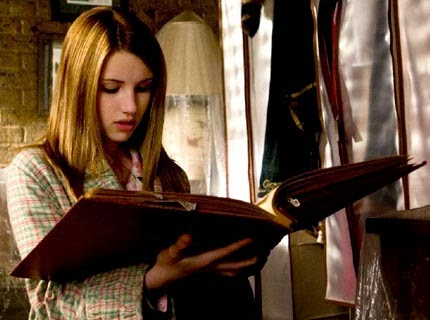
Emma Roberts as Nancy Drew
Also, someone could be trying to remember something. In The Last Thing I Remember, the main character wakes up in a room at the beginning of the book not knowing anything about himself. Throughout the whole story, he tries to figure out why two different parties are after him, why he's a wanted criminal and why he can’t remember anything including his name. When you have a case like this, identity quests can sometimes be involved. 
The character could also be going out to get physical documents or files. In Elysium Max makes a deal with Spider in which he will retrieve certain documents in exchange for a trip up to Elysium where the life saving machine is. In this case, the documents aren't his only concern but they become a primary focus. 
ex. Nancy Drew series, The Last Thing I Remember, Elysium

7. The tragic quest
For this quest, the character is trying to make things right again either with themselves emotionally or with someone else no matter how hard it is and whether or not they have to suffer. 
These stories are typically quite heartbreaking. Usually they have tragic endings and the character is just in rough shape emotionally and/or physically the whole time. Things for the main character are just generally terrible. Nothing seems to be going their way and yet they press on. 
An exception for the tragic ending thing is The Patriot. Overall, it's a really sad story but the main character lives on tell the tale so to speak. While there's a lot of death throughout the movie, it was more of a 'bittersweet' ending. 
ex. The Machinist, Road to Perdition, The Patriot


Jim Carey and Jeff Daniels
in Dumb and Dumber

8. The fool’s errand.

Another way of saying this is that a simple-minded person saves the land or the princess just because of their own unawareness to their foolishness. 
I find this one particularly fun. You get those books where the character is just so quirky you have to love them. There can be a lot of humour in this quest.
An example of this is Shrek. Not necessarily Shrek himself but Donkey. Donkey saves Shrek's butt in the castle by sweet talking a dragon. I don't know about you but sweet talking a dragon is a dumb idea to me! Of course, Donkey didn't see this and ended up buying Shrek some time and indirectly saving the princess. 
ex. Shrek, Dumb and Dumber

9. The quest to rid the land of danger.

I love this one because you can show just how small your character is compared to the huge task of ridding an entire land of danger. This quest ties in pretty well with number four so if you have this one, you probably also have that one. Not always, but often. 
Bilbo in The Hobbit: The Desolation of Smaug
In Mockingjay, the purpose of the rebellion is not only to get revenge (hey, another quest!) on the Capitol but also to make the districts feel safe without the games. Therefore, they’re ridding the land of the danger of the games. 
This archetype could be anything from the eradication of a dictatorship to the slaying of a dragon. The great thing with this archetype is that the climax has the potential to have an epic battle in the end. 
ex. The Bronze Bow, Mockingjay, The Hobbit

10. The grail quest (the quest for human perfection).

Let’s face it, no one will ever be perfect. But hey, it would make a good story if someone tried right? This is a really good inner battle that the character can have, especially if they’re under the impression that they can't make any mistakes or are already perfect. 
The hero doesn't necessarily have to go in search of full out perfection. Maybe they're looking to be the best at something, or to live eternally. Maybe they're just part of a journey that takes a step towards making them a better person. 
Is the movie A Thousand Words, Jack, a literary agent, really doesn't know when to keep his mouth shut. He goes through his own type of a grail quest. Not in the sense where he becomes perfect but he improves who he is as a person. 
These quests can also include spiritual nourishment. 
ex. A Thousand Words, Evan Almighty. 

11. The question for fame and fortune.

Ever read one of those stories where a girl in high school really wants to be popular and noticed for once in her life? Or what about the athlete who is working his but off to make it big time in the Olympics? How about searching for treasure? Absolutely! I've read some great stories where the main character is looking for some sort of jackpot. 
Cal (left) and Boges (right) in the
TV adaptation of Conspiracy: 365
Personally, I think that the stories that do this best are the ones in which the character's motives aren't necessarily surrounding getting rich or famous. Maybe they're trying to save a family member like in the movie, Catch That Kid. Or maybe their dad left a mysterious note behind before he died, promising that he found their family's inheritance like in the Australian book series, Conspiracy: 365.
Usually in this archetype, the antagonists are after the exact same thing the protagonists are, they just have their own motives. 
ex. Catch That Kid, Conspiracy: 365, National Treasure 

So now that all the journeys have been covered, which one does your own novel or your favourite one fall under? Let me know in the comments below!

Sunday, February 02, 2014

Archetypes: A Hero's Journey Part 1

Only last year, I discovered something that blew my mind. If you haven’t guessed already from the title, that thing is archetypes. Maybe you're thinking that I should have known this before I turned sixteen. But before I was sixteen, I didn't care enough to go out searching for this type of information. 

The term 'archetype' was placed on literature by Carl Jung who recognized that there are universal patterns in all stories regardless of culture or time period. He guessed that every human mind thought in a similar way when creating stories. 

So he’s basically saying that even if you never read a book in your life and decided to write one, certain elements (archetypes) would show up in your novel that are similar to many others. Mind blown yet? No? Maybe this will do it: as I got further into reading about archetypes, I pinpointed more than several patterns that I'm using in my science fiction novel. I never even knew about archetypes until I was a good 30K words into my story! 
The thing with archetypes is that they happen whether you want them to or not. It's kinda cool, really. 

FUN FACT: George Lucas wrote the Star Wars saga based off of archetypes.


So you may start reading these archetypes and say, “But Cassia, that’s a cliche isn’t it?”

No, actually it’s not. Archetypes are pretty broad. Even if some may be more common than others, there’s definite ways to manipulate them to make them your own. For example, an archetypal setting is the end of the world. How many books have you read or heard of that are set in a post apocalyptic society? Lots, right? Most authors seem to be able make their setting unique, right? There’s everything from zombies taking over the planet (Warm Bodies) to infections destroying the human race (The Maze Runner) to people being forced to kill each other for national entertainment (The Hunger Games). So really, archetypes aren’t as much a cliche as they are a pattern. Make sense?
Great, let’s move on to the fun stuff!

Today I will be discussing the journeys that a character can travel.

There are 11 types of journeys that a character can go on, archetypally speaking of course. I'm going to cover the first five in this post. As you read this, if you’re a writer, think of what category your work fits under and if you’re just a reader, think of your favourite book and try to pinpoint the journey that the hero/heroine goes on.

Some of my examples are movies, not books but they still are a story. 


1. The quest for identity.

Jason Bourne in the Bourne Identity Movie

This is an extremely popular quest used. Even if it’s not the main journey that the character goes on, it’s usually a side journey. I think the reason why it’s so popular is because it’s so relatable. In life, everyone wants to discover who they are, what makes them, them. This journey makes a character seems real. My list of examples could go on forever but I decided to shorten it to two.
ex. The Bourne Identity, Divergent

2. The epic journey to find the Promised Land or to build a good/beautiful city.

In the Wizard of Oz, Dorothy needs to find the Emerald City in order to make it back home. Her journey revolves around getting to this ‘promised land’ so that she can get back to Aunt Em. You could even argue that The Hobbit falls under this archetype. While the Dwarves already know where their land is, it's not good and beautiful anymore. They need to rebuild it. But first, they need to rid the mountain of danger; that's another archetype in part two.
ex. The Wizard of Oz, Animal Farm
A screenshot from The Count of Monte Cristo movie

3. The quest to get revenge.

I personally think that this quest has so much depth and many possibilities. There’s a million reasons why someone would want revenge on another person and even more ways that they could go about getting revenge. Authors can show so much of their character this way. It's a tricky one though especially since it can become cookie cutter. The examples I chose are very unique compared to other revenge stories I've read.
ex. The Count of Monte Cristo, Code Geass

4. The warrior’s quest to save the people.

I personally love this one...a lot. In fact I love it so much that my current WIP, Crec, follows this quest. One of my favorite science fiction novels has this quest embedding in it. I Am Number Four and the books that follow it, tracks a group of aliens (Loric) who look human and come to earth after their planet was destroyed. Another alien race (Mogadorians) have also come to earth with plans to destroy it and inhabit it. The Loric are the only ones who can stop them from wiping out the human race but they don’t want to let the people of earth know they exist. A challenge nonetheless. To make things even more difficult, the Mogadorians want to get rid of them so that they can take over the planet. You can see the problems and battles that this would create.
A lot of superhero movies follow this journey as well. Usually they aren't trying to save themselves, they're trying to save the city which is under the control of the villain. 
ex. I Am Number Four, The Dark Knight Rises


Romeo and Juliet as portrayed in
the 1996 film adaptation
5. The search for love. 
This can also include rescuing the princess or damsel in distress. Romance writers, this is probably gonna be your main character’s primary journey. The main character here can either be looking for love in a way where they go out looking for the one or it they can just feel unloved and try to find someone, anyone who will accept them. It doesn't necessarily have to be romantic love that they're looking for. 
ex. The Vow, Romeo and Juliet

So there you have it. The first five out of eleven archetypes.

If you're writing, does your character's quest fall under any of these? If you don't write, how about your favorite book that you're reading?